A Monthly AI Think Tank For San Diego Business Owners
Nobody keeps up with AI alone. A room of business owners does. That is the entire point.
Agentic Think Tank is a free monthly room in Pacific Beach where business owners put what is actually working with AI on the table. Not theory. Not demos. What they installed in a real company, what it returned, and what broke. Once a month you compare notes with people solving the same problems, and skip six months of figuring it out alone.
Next Session
Reservation RequiredThird Friday. Every month. Only 50 seats. Same room, same time: so you can actually plan around it.
Reserve Your SeatThe Real Problem
Everyone thinks they need more AI. They already have it. They're still the bottleneck.
You watch the demos. You sign up for the tools. You know something real is in there. And the research now says what you already feel: 80 percent of people report AI made them personally faster, while only 37 percent of companies can trace it to profit (McKinsey, State of AI 2026). The gap between those two numbers is where your last year went.

Everyone got faster. Almost nobody got paid.
MIT's GenAI Divide study found 95 percent of companies saw no measurable return on their AI spend. Not because the models are weak. Because integration, memory, and workflow never got built. Speed without a system never shows up in the P&L.
The big companies are pulling away
McKinsey's 2026 data: 40 percent of billion-dollar companies are now scaling AI agents. Deloitte Private puts strong AI returns at 64 percent of large private firms, and roughly one in ten for businesses under $500 million. The compounding has started. It just hasn't started at your size, unless you build it.
You became the operating system
The average owner now pays for about four AI tools. Each one does ten percent of a job, and you carry the other ninety between apps that don't talk to each other. Limits hit mid-task, context dies, you start over. You are paying for intelligence you can't install.
AI is creating work that looks like work
Harvard Business Review named it workslop: AI output that looks finished and quietly creates rework downstream. Mid-market research backs it up: about 80 percent of IT leaders say AI outputs introduce errors, and a quarter of AI budgets burn off in integration before any return arrives. Faster drafts. More tabs. Same bottleneck.
And you're working through all of it alone
BCG's rule for AI that actually works: about 10 percent is the algorithm, 20 percent is the data, and 70 percent is people and process. No subscription touches the 70. A room of owners comparing real installs every month does. That is the problem this room exists to solve.
Why This Room Exists
AI is creating two kinds of business: the ones who wait, and the ones who build.
The businesses that wired their buildings for electricity early didn't just keep up. They pulled away.
AI is the same kind of shift.
Right now everyone is fighting for your attention on social media, while almost nobody is fighting for the local room.
Search "AI meetup San Diego" and you'll find two kinds of rooms. One is a coding workshop: bring a laptop, learn a framework, leave with syntax. The other is a webinar you watch alone, muted, in a browser tab. Neither one touches the actual job: turning AI into a system that runs your business without you standing over it.
Agentic Think Tank is the third room. In person. Business-outcome first. Built for people who run a business, a team, or a P&L. This is for people who demand ROI from AI.
The Honest Options
Three paths in front of you. Only one of them leaves you able to run it.
You already know AI needs to be in your business. The question is how you learn it. Here's what the paths honestly look like, not the sales version.
You watch videos. You tinker. You ask around in a group chat where nobody really knows. This works if you have months of spare time and don't mind building the wrong things first. Your time is worth more than being your own research department.
You hire a consultant or an agency. It works until it doesn't, and then you have no idea why. You can't train it, maintain it, or fix it yourself. You're renting intelligence instead of owning it.
Every month you sit in a room of owners installing AI into real companies, hear what worked and what broke, and leave knowing what to build next. Free. In person. That's Agentic Think Tank.

The Format
Doors at 1:30. One build, one discussion. Out by 4:00.
Same run of show, every month, so the room knows exactly what it's walking into.
Name tag, coffee or a local pour. Get settled, find your people, start talking. Arrive by 1:45 at the latest: we start on time at 2:00, every month.
The whole night runs through one build. One AI system gets built on screen in plain language: an agent, a workflow, a process, a framework. Actual screen, actual prompts, actual failure points. The room weighs in throughout, because half the people in it have already tried something adjacent.
The room takes over. Hot seats, straight feedback, and an open exchange of what's working and what's not inside each other's businesses. This is the think tank doing what a think tank does.
We end on time at 4:00, every month. Then many of us head out to a local happy hour in Pacific Beach. You're welcome to join us.
Arrive by 1:45 at the latest. We start on time at 2:00 and end on time by 4:00. Only 50 seats: if you can't make it, decline your reservation so your seat goes to the waitlist, and catch the next one.
Inside The Room
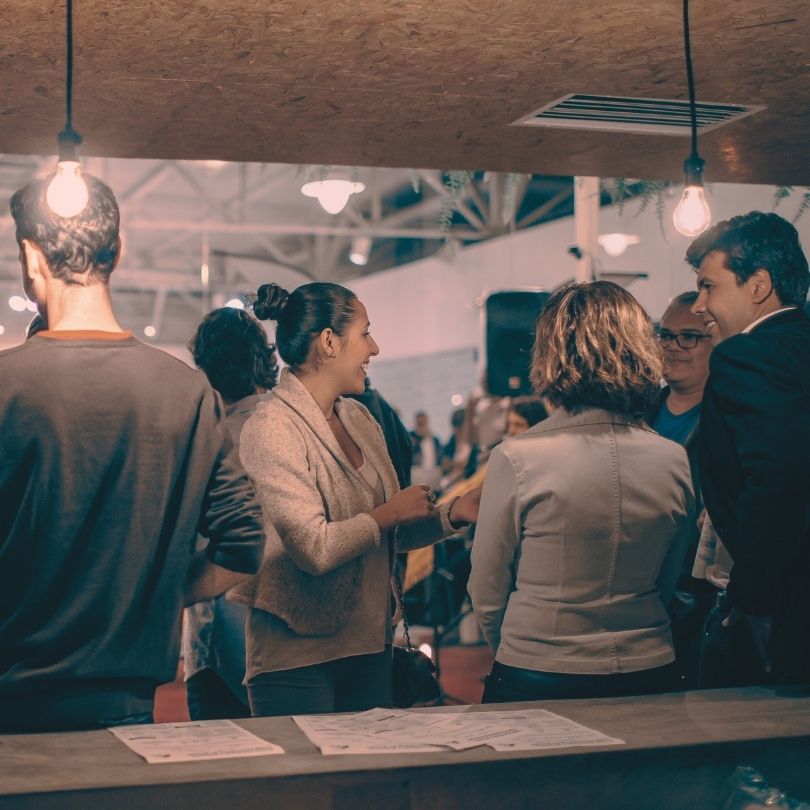
Here's how the experience unfolds, start to finish.





Who This Is For
Built for people who have a business, have exited a business or are starting up a new business (with years of expertise).
- You run a business, a team, or a P&L, and AI has to earn its keep against revenue: not novelty.
- You want systems that run without you, not another subscription you'll cancel next month.
- You'll put what you know on the table: what you installed, what it returned, what broke.
- You'd rather compare notes with a room of real operators than watch another webinar on mute.
- Developers looking for a deep technical session on model architecture. San Diego has great rooms for that.
- Spectators. This is a working session: everyone contributes, nobody just browses.
- Theory and hot takes about where AI might be going. This room deals in what's installed and working now.
- Anyone who can't run on the clock. We start on time at 2:00 and end on time by 4:00.
No tool checklist required. No résumé to submit. Just show up and share what you are actually working on.
What You Leave With
Not inspiration. Meaningful Implementation.
- A working system or workflow you can put to use Monday morning: not a stack of ideas.
- A room of San Diego operators solving the same problems you are, in the same three hours.
- A clear next step for your own business, pressure tested against people running the same play.
- A standing invite to the next one. Same night, same room, every month.
Where
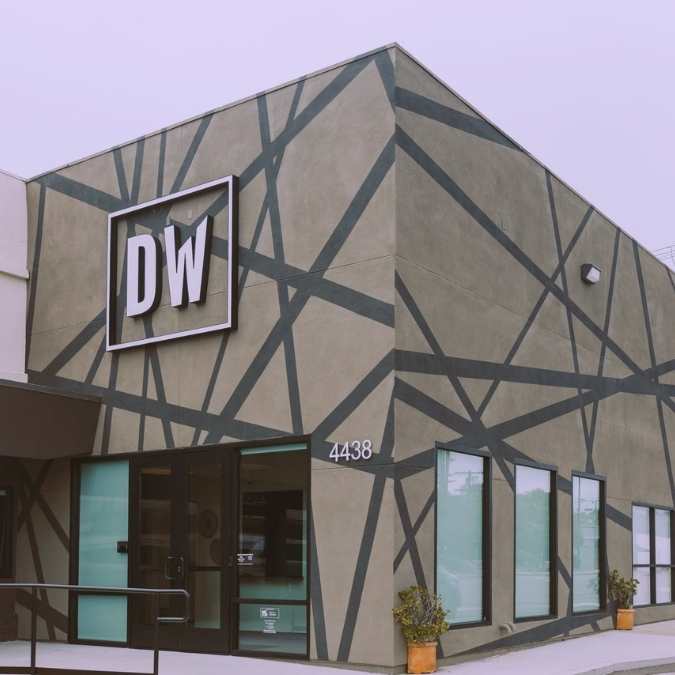
Downtown Works, Pacific Beach.
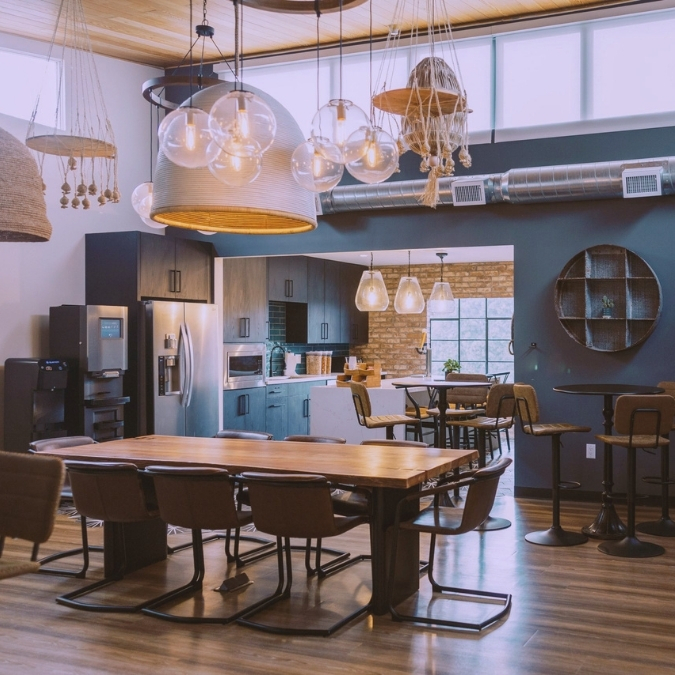
10,000 square feet of hospitality-inspired coworking, right off Ingraham and Hornblend: meeting rooms, an outdoor patio, and a kitchen that pours local coffee and craft beer. Downtown Works shares the building with a handful of other businesses (Ocean Cafe, The Yoga Studio, The Hair Salon, and more), which matters for exactly one thing: parking.
-
Corner of Ingraham & Hornblend, Pacific Beach.
-
Getting here
Free street parking on Ingraham, Grand, Felspar, and the surrounding blocks. Or grab an Uber or a Waymo, especially if you're staying for The After.
-
Fast wifi, on-site A/V
Fast wifi and a real display for The Build screen-share. Bring your laptop if you want to build along in real time: good idea, not required.
Good To Know
Do not park in the building's parking lot. Those spaces belong to the building's other businesses, not event attendees, and cars left there risk getting towed at the owner's own expense. Use free street parking on Ingraham or the surrounding blocks instead.
Doors at 1:30 PM. Arrive by 1:45 at the latest: we start on time at 2:00 and end on time by 4:00. No dress code, no laptop required.
No pets. This is a working session for people, not animals: please leave yours at home.
The room is free, but it caps at 50 seats and it's not first-come: reserve ahead on Luma and check in at the front desk when you arrive. No reservation, no seat, including plus ones.
Hosted By
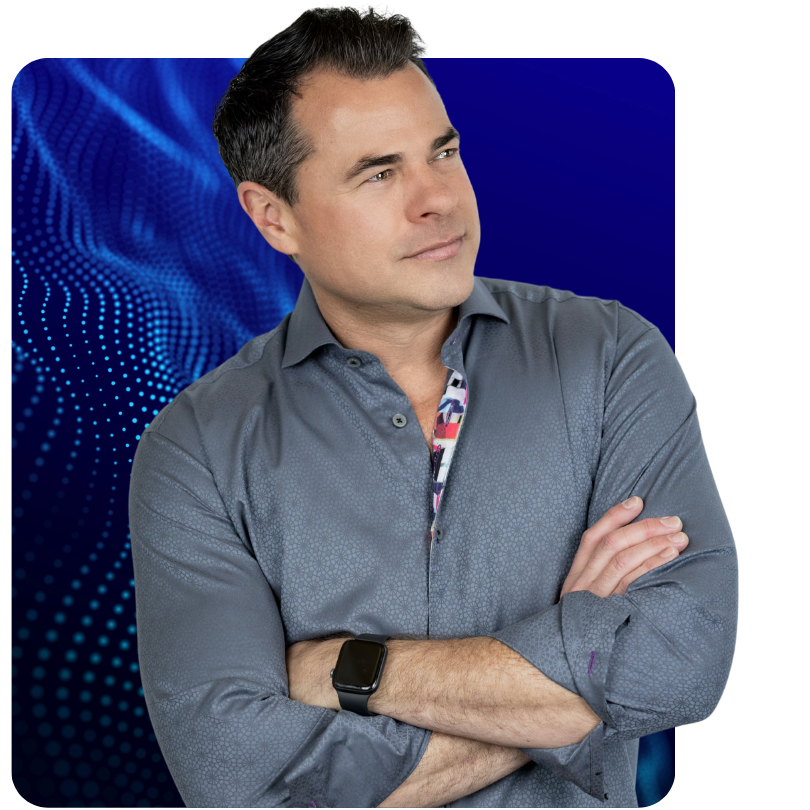
Travis Houston
Travis spent 20+ years as the marketing architect behind names you already know: three New York Times bestselling book launches in under 22 months as CMO for JJ Virgin, then Dr. Amy Myers, John Assaraf, and other A-List thought leaders. That work generated millions in revenue for each client, and none of it came from working harder. It came from systems.
He's the author of Knowledge Clones and Turn Views Into Profit, and today he builds AI systems that have to survive inside real businesses, starting with his own. One rule governs everything he builds: Simple Scales, Complex Fails.
Travis convenes Agentic Think Tank and keeps it useful: one build on screen and one room that talks back. He is not the smartest person in the room, and that is the point. The room is.
Questions
Before you reserve a seat.
"I'm not technical. Will I be lost?"
No. This room is built for people who run businesses, not people who build software. Everything happens in plain language, in tools you already recognize, and nobody assumes you know a framework from a flowchart. You're not here to learn to code. You're here to learn what to build first, and why.
"Is this really free? What's the catch?"
Free. No ticket, no card, no surprise at the door. Reserve on Luma with your name and email, check in at the front desk when you arrive, and Luma sends your reminders by email or app. But there are only 50 seats, and every one is reserved ahead. The only catch is the honest one: the room runs on contribution. Show up, share what you know, ask what you don't, and this free room becomes worth more than most paid ones.
"I've tried AI tools before and nothing stuck."
Then you're exactly who this room is for. A tool that didn't stick isn't a failure, it's a data point, and half the room is carrying the same ones. That's the entire reason we compare notes: you find out what actually held up inside a real business before you spend another six months testing alone. Bring the story of what stalled. It's worth more to the room than a win.
What time does it actually start and end?
Doors at 1:30 PM, and arrive by 1:45 at the latest: we start on time at 2:00. The Build runs 2:00 to 3:00 PM, Group Discussion 3:00 to 4:00 PM, and we end on time by 4:00. Plan around two and a half hours, then decide whether you're joining The After.
What happens if I'm running late?
You can still check in and join the Group Discussion, but The Build starts on time at 2:00, it doesn't pause, and it doesn't repeat itself for latecomers. The room runs on the clock, not on when you show up. Arrive by 1:45 at the latest.
"Do I need to bring a laptop?"
Not required, but a good idea. We're often building in real time with screen shares running, and people who bring one build right along. If you'd rather just watch, talk, and grab a photo of the screen when something's worth keeping, that works too.
Is this a one-time event or does it repeat?
It repeats every month, third Friday. Doors at 1:30 PM, program 2:00 to 4:00 PM, same room every time. Some people come once and get what they came for. The ones who compound come monthly, because the room remembers what you were building and asks how it went.
"Can I bring someone with me?"
Yes, if they'd hold their own in the room. There's no walk-in plus one: anyone joining you reserves their own seat on Luma with their own name and email, and checks in under their own reservation. The 50-seat cap is real, so an unregistered guest is somebody else's empty chair.
Where do I park?
Do not park in the building's parking lot. Downtown Works shares the building with other businesses (Ocean Cafe, The Yoga Studio, The Hair Salon, and more), and that lot is reserved for their customers, not event attendees. Cars left there park at their own risk, including the risk of getting towed. Use free street parking on Ingraham, Grand, Felspar, or the surrounding blocks. Or skip parking entirely and grab an Uber or a Waymo, especially if you're staying for the happy hour after.
What kind of people are actually in this room?
People who have a business, have exited one, or are building one on years of real expertise. They came to work, not to browse. This isn't a mixer with an AI theme bolted on: if you show up without something real to work on, you get less out of the room, and so does the person next to you. Reserve your seat like it costs something. It does: it costs everyone else their time.
Can I put my own situation in front of the room?
That's the point of a think tank. The Group Discussion runs on hot seats and straight feedback: say what you're stuck on and the room responds. Odds are good someone here has already tried the thing you're considering, and they'll tell you what it cost and what it returned. That answer would take you a month to find alone.
What happens after 4:00?
We end on time at 4:00, out of respect for your calendar and the venue's. Then The After: many of us head to a local happy hour spot in Pacific Beach and keep the conversation going off the clock. Completely optional, usually where the best introductions happen, and you're welcome to join us. We announce the spot at the session.
What if I register and don't show up?
Your seat goes to someone on the waitlist. Every time. That's not a punishment, it's just math: an empty chair is a seat somebody else didn't get. Decline the moment your plans change, and you're always welcome back next month.
What if I can't make it this month?
Decline your reservation as soon as you know, so your seat opens up for someone on the waitlist: there are only 50, and an empty one helps nobody. Then RSVP for the next one. There's no makeup session: miss the room, miss the month. The next session is the third Friday of the following month. Same room, same time.

The window doesn't stay open for everyone.
Every third Friday, one more system gets built in this room and one more business pulls away from the ones still waiting to see what happens. The room is free. The seats aren't unlimited.
Third Friday · Every Month
One seat. One room. Everything that works, on the table.
This room runs twelve times a year with only 50 seats in it. Miss one and you're not behind by a night. You're behind by a system.
Arrive by 1:45 at the latest. We start on time at 2:00 and end on time by 4:00. Can't make it? Decline your reservation so your seat goes to the waitlist. And after 4:00, many of us head to a local Pacific Beach happy hour: you're welcome to join us.
Downtown Works · Pacific Beach · Doors 1:30 PM · Program 2:00 – 4:00 · Free · 50 Seats
Reserve Your Seat